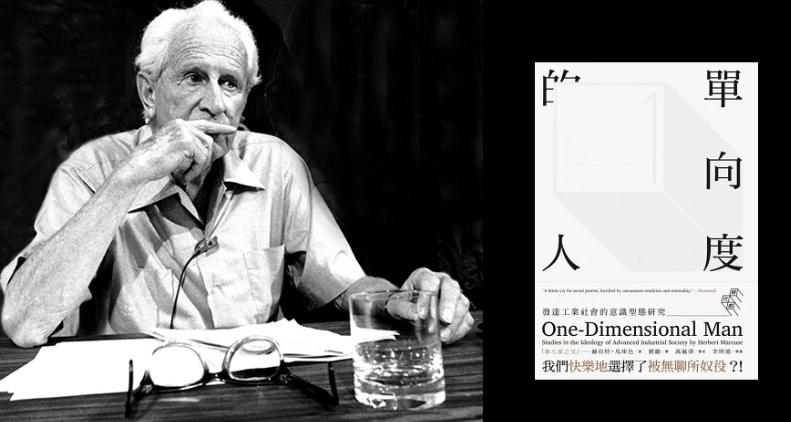
Book Notes on 'One-Dimensional Man': When Consumption and Technology Become New Forms of Control
Herbert Marcuse (1898-1979) was a German-American philosopher and social theorist, and one of the core members of the Frankfurt School. His magnum opus, One-Dimensional Man: Studies in the Ideology of Advanced Industrial Society, published in 1964, profoundly influenced the student movements and the New Left of the 1960s. It remains one of the most important critical works for understanding modern consumer society.
Reading Marcuse, I found myself deeply moved. Looking at our lives today, so much of what we do is driven by manufactured desires. Someone buys a phone today and already wants the next-generation chip tomorrow. They get a PRADA bag, then feel they need an Hermes one. Life becomes an endless cycle of upgrades. In reality, if we pause to think clearly, pure consumerism cannot be the entirety of life. Yet today, many of us are drowning in material excess and unchecked desire.
The One-Dimensional Society: New Forms of Control
The first chapter of One-Dimensional Man is titled "New Forms of Control." We all understand that a functioning society requires some form of control -- it cannot descend into chaos. But the methods of control have always evolved; there is no permanent solution. In ancient times, rulers controlled society through violence and coercion. Marcuse's key insight is this: in modern Western capitalist societies, control no longer operates primarily through violence and coercion, but through technology and consumer culture.
Technology's Impact on Politics
In the 1960s, Western capitalist societies experienced rapid industrial and technological development. Marcuse argued that this technological progress was not merely about increasing productivity -- it was an effective instrument of social control. The assembly line certainly boosted efficiency, but it also mechanized workers, stripping them of creativity and autonomy. Workers became appendages of technology.
Under this logic, it wasn't just workers who were affected. Professional politicians also fell prey to the technicalization of politics. Marcuse pointed out that modern Western politics had been colonized by technological rationality. Genuine democracy and public participation were weakened. The intrinsic value of political activity was hollowed out, reduced to a mere instrument. Political problems became technical and efficiency problems. Western capitalist states lost their capacity for imagining a better society and their responsiveness to democratic aspirations.
Consumer Culture's Control Over Politics
Furthermore, Marcuse argued that the technology of the industrial age also exerted control over people's minds through consumer culture. Advertising and media manufactured enormous consumer demand -- demand that did not originate from genuine human needs but was artificially created. People constantly craved the next generation of products, upgrading things that weren't even broken. The "expansion" of consumer culture extended beyond material goods to include entertainment and information consumption. People craved ever more "news" and "sensational stories."
Television news and mass media often used oversimplified language and images to report on complex social events. Audiences couldn't access comprehensive information and couldn't form their own critical perspectives. They saw only the surface of events, unable to grasp the underlying complexity. Serious matters were reduced to information commodities, packaged with sensational headlines and explosive visuals to capture attention.
The Illusion of Technological Utopia
In Western capitalist societies, technology functioned as an ideology by projecting a vision of technological utopia. Many people fantasized about a future of unlimited technological advancement -- boundless resources, infinite lifespans, poverty and disease conquered. Technology would solve everything, and the world would be at peace.
But Marcuse reminded us: people overlooked how capital colonized everyday life through the discourse of technology, and learned to tolerate the alienation of daily existence.
┌─────────────────────────────────────────────────────┐
│        Control Mechanisms of One-Dimensional Society │
├─────────────────────────────────────────────────────┤
│                                                     │
│   Ancient Society       Modern Capitalist Society   │
│   ┌───────────┐        ┌──────────────────────┐    │
│   │ Violence  │        │ Technology + Consumer │    │
│   │ Coercion  │   →    │      Culture          │    │
│   │ Force     │        │  ┌───────┐ ┌───────┐  │    │
│   └───────────┘        │  │ False │ │ Tech  │  │    │
│                        │  │ Needs │ │Ration.│  │    │
│                        │  └───┬───┘ └───┬───┘  │    │
│                        │      │         │      │    │
│                        │      ▼         ▼      │    │
│                        │  ┌────────────────┐   │    │
│                        │  │ One-Dimensional │   │    │
│                        │  │   Thought       │   │    │
│                        │  │ Criticality Lost│   │    │
│                        │  └────────────────┘   │    │
│                        └──────────────────────┘    │
└─────────────────────────────────────────────────────┘
The Liberating Potential of Art and Its Assimilation
High Culture vs. Mass Culture
In One-Dimensional Man, Marcuse also devoted significant attention to the question of culture. He distinguished between "High Culture" and popular culture. High Culture referred to cultural forms considered to possess deep intellectual content, artistic value, and social criticism -- classical music, literature, philosophy, theater, visual arts, and the like.
What made High Culture "high" was not that it was elitist, but that it preserved a necessary "distance" from reality. This distance allowed it to remain uncompromising, to avoid pandering. It didn't need to squeeze into the factory of industrialization, and it could maintain a strong capacity for negation. Such works were often not immediately accessible -- they required gradual immersion. Their purpose was to challenge the existing social order and express complex ideas and emotions.
The Assimilating Power of Mass Culture
But in capitalist society, Marcuse argued, this liberating power of High Culture was frequently "assimilated" or "absorbed" into consumer culture, losing its original critical edge. Mass culture sought to eliminate distance, demanding that literary works be "relatable." The suffering of some was turned into spectacle and sold to the masses as "non-fiction writing," with templated, formulaic structures. Such works could initially be compelling, but they were quickly followed by waves of formulaic imitations -- mass-produced cultural industrial products that lost their original depth of thought and capacity for social critique.
┌─────────────────────────────────────────────────────┐
│            The Process of Cultural Assimilation      │
├─────────────────────────────────────────────────────┤
│                                                     │
│   High Culture                Consumer Culture      │
│   ┌──────────────┐           ┌──────────────┐      │
│   │ Criticality  │           │ Commodified  │      │
│   │ Distance     │ Assimil. →│ "Relatable"  │      │
│   │ Negation     │           │ Formulaic    │      │
│   │ Imagination  │           │ Templated    │      │
│   └──────────────┘           └──────────────┘      │
│        │                          │                 │
│        ▼                          ▼                 │
│   Potential for              Mass-produced          │
│   liberation & change        cultural products      │
│                                                     │
└─────────────────────────────────────────────────────┘
One-Dimensional Thought
The Crisis of Modern Education
Marcuse argued that a one-dimensional society produces only one-dimensional thought. In the Western capitalist societies of the 1960s, the capacity for negation had been dissolved. The dominant theme of life was to accept the status quo and pursue technological progress and product innovation within the existing framework. The education system focused primarily on technical skills and vocational training, emphasizing specialization while neglecting the cultivation of students' critical thinking and creativity.
Many people strongly emphasized professional education in schools -- and that's understandable. From an ordinary person's perspective, a profession is a livelihood; the higher the professional barrier, the more secure the livelihood. But Marcuse pointed out that in an age of deep consumerization and technicalization, one-dimensional education primarily produces instrumental human beings. This kind of education doesn't require students to have any particular imagination about the world -- it simply wants to use them as a means, tirelessly enduring repetitive work. The ideal person is a "technical specialist" who can execute procedural steps within a workflow but cannot reflect on the workflow itself, nor envision a more ideal form of social life.
The Instrumentalization of Philosophy
Marcuse also discussed the fate of philosophy in this process. Affirmative thinking held that technological advancement and commercial prosperity were the only criteria for a correct life. Once this mindset became dominant, philosophy too was colonized by technological rationality, losing its critical capacity. Philosophy became increasingly formalized and specialized, disconnected from ordinary life, and lost its liberating potential.
Analytic philosophy, while achieving results in logic and linguistic analysis, had little to offer in terms of social critique and human liberation. From Marcuse's perspective, this trend stripped philosophy of its emancipatory potential, turning it into a servant of technological rationality -- an approach that was fundamentally anti-philosophical.
┌─────────────────────────────────────────────────────┐
│         The Formation of One-Dimensional Thought     │
├─────────────────────────────────────────────────────┤
│                                                     │
│   ┌─────────────────┐    ┌─────────────────┐       │
│   │ Deep Consumer-  │    │ Instrumental    │       │
│   │ ization + Tech  │    │ Rationalism     │       │
│   └────────┬────────┘    └────────┬────────┘       │
│            │                      │                 │
│            ▼                      ▼                 │
│   ┌─────────────────────────────────────┐          │
│   │    One-Dimensional Education        │          │
│   │  - Produces instrumental people     │          │
│   │  - Neglects critical thinking       │          │
│   │  - Philosophy instrumentalized      │          │
│   └──────────────────┬──────────────────┘          │
│                      │                              │
│                      ▼                              │
│   ┌─────────────────────────────────────┐          │
│   │  Society loses all capacity for     │          │
│   │  negation → Totally affirmed society│          │
│   └─────────────────────────────────────┘          │
└─────────────────────────────────────────────────────┘
Tentative Solutions: Where Is the Way Out?
Having identified these problems, where do we go from here?
Marcuse emphasized that technology itself is not the root of the problem. The issue lies in how technological rationality is used to maintain the existing social order. Technology has become an ideology -- even a source of identity for some people. Anyone who doesn't enthusiastically embrace technology risks being dismissed as backward. According to Marcuse, if we don't change the structure of capitalist industrial society -- if we blindly believe that technological rationality represents the ultimate form of life -- humanity will continue to lose genuine freedom within an illusion of false freedom and happiness.
1. Restore Our Imagination of the World
Among Marcuse's ideas, I think several directions are worth pursuing. First, we must restore our imagination of the world. Imagination inherently contains negation and criticism, because it can extract unrelated things from their established order and recombine them -- even contradictory things -- into new wholes. Imagination therefore possesses a powerful dimension of criticality and negation. This negativity isn't mere contrarianism; it's the ability to view life from an alternative perspective.
2. Break Free from Technological Solutionism
In an age of technological monopoly, we must first escape blind faith in technological solutionism. The assumption that the good life equals a technologically advanced life -- that we can buy more things, that everything becomes more convenient -- obscures the fact that a good life can take many other forms. I believe each of us can envision our own multidimensional version of a good life.
3. Break Free from Instrumental Rationality
We also need to escape the mindset of instrumental rationality. The essence of technology is instrumental rationality: achieving maximum output with minimum input. Instruments emphasize only utility. But life is not only about instrumental rationality -- many activities in life have intrinsic value that cannot be instrumentalized. When we filter all of life through instrumental rationality, only what fits within its framework becomes the focus of life. So the "success" we constantly discuss -- getting promoted, earning more money -- is ultimately the process of turning ourselves into instruments.
Conclusion: The Liberation of Sensibility
Beyond One-Dimensional Man, Marcuse also wrote Eros and Civilization, integrating Freudian psychoanalysis with Marxism and advancing a theory of social repression and liberation. Marcuse argued that the liberation of sensibility -- not rationality -- is the true key to achieving social emancipation. He envisioned an ideal society in which people could free themselves from the repression of desire imposed by traditional culture and economic structures, freely expressing and fulfilling their sensuous needs.
What struck me most deeply was Marcuse's argument that human liberation requires liberating sensibility first, not rationality. He seemed to believe that rationality slides too easily into technological logic and instrumental reason. Rationality works like antibiotics -- often effective, but dangerous when overused. Overusing antibiotics breeds superbugs; overusing rationality breeds an unshakeable faith in technological solutionism, turning technology into an ideology immune to emotional appeal. Sensibility is different. Sensibility fundamentally rejects the language of utility, efficiency, control, cost, and profit. Sensibility is the most direct outlet of eros. Sharpening our sensibility gives us the raw material to reimagine a new world -- one where freedom can finally be seen, cared for, and desired.
"In modern Western society, technological rationality prevails, reducing everything to a means for achieving specific ends, thereby neglecting the true needs of human desire and sensibility." -- Herbert Marcuse